The route
Lisbon · Óbidos · Batalha · Tomar · Ourém · Castelo de Vide · Marvão · Belmonte · Salamanca · Ávila · El Escorial · Madrid · Toledo · Almagro · Granada · Córdoba · Seville · Moncarapacho · Lisbon
Day by day
Day 1Lisbon
Early on, a guided visit to the Synagogue of Lisbon, its facade hidden because of the strict rules once imposed on Jewish buildings and still the meeting point of the city’s Jewish community. Then St George Castle and its quarter, Alfama, and the Judiaria of narrow streets and small houses. In Commerce Square thousands of Jews were baptised against their will. Belém and the Manueline Jerónimos Monastery recall the Age of Discoveries; Downtown and Chiado their 18th century trade.
Day 2Óbidos – Batalha – Tomar – Ourém
North to Óbidos, a medieval town whose castle walls enclose whitewashed houses and whose cobbled lanes offer ginjinha, a cherry liqueur. Batalha follows, UNESCO World Heritage for its Gothic monastery; the Founder’s Chapel holds Portuguese kings and Prince Henry the Navigator, who hired the finest Jewish cartographers, geographers and mathematicians of the 1400s. The afternoon is Tomar, with one of Portugal’s most important Synagogues, the Abraham Zacuto Jewish Museum and the Convent of Christ. Overnight in Ourém.
Day 3Castelo de Vide – Marvão – Belmonte
On to the Alentejo and Castelo de Vide, high on the São Mamede mountain, which keeps its castle, its Jewry and one of the oldest and most important Synagogues in Portugal. The town welcomed thousands of Jews after their expulsion from Spain, and its community is among the best preserved in Europe. Nearby Marvão, whose castle once defended Portugal against Spanish invaders, is the place to try Alentejo cooking. Then to Belmonte, arriving the day before the Sabbath.
Day 4Belmonte (Sabbath)
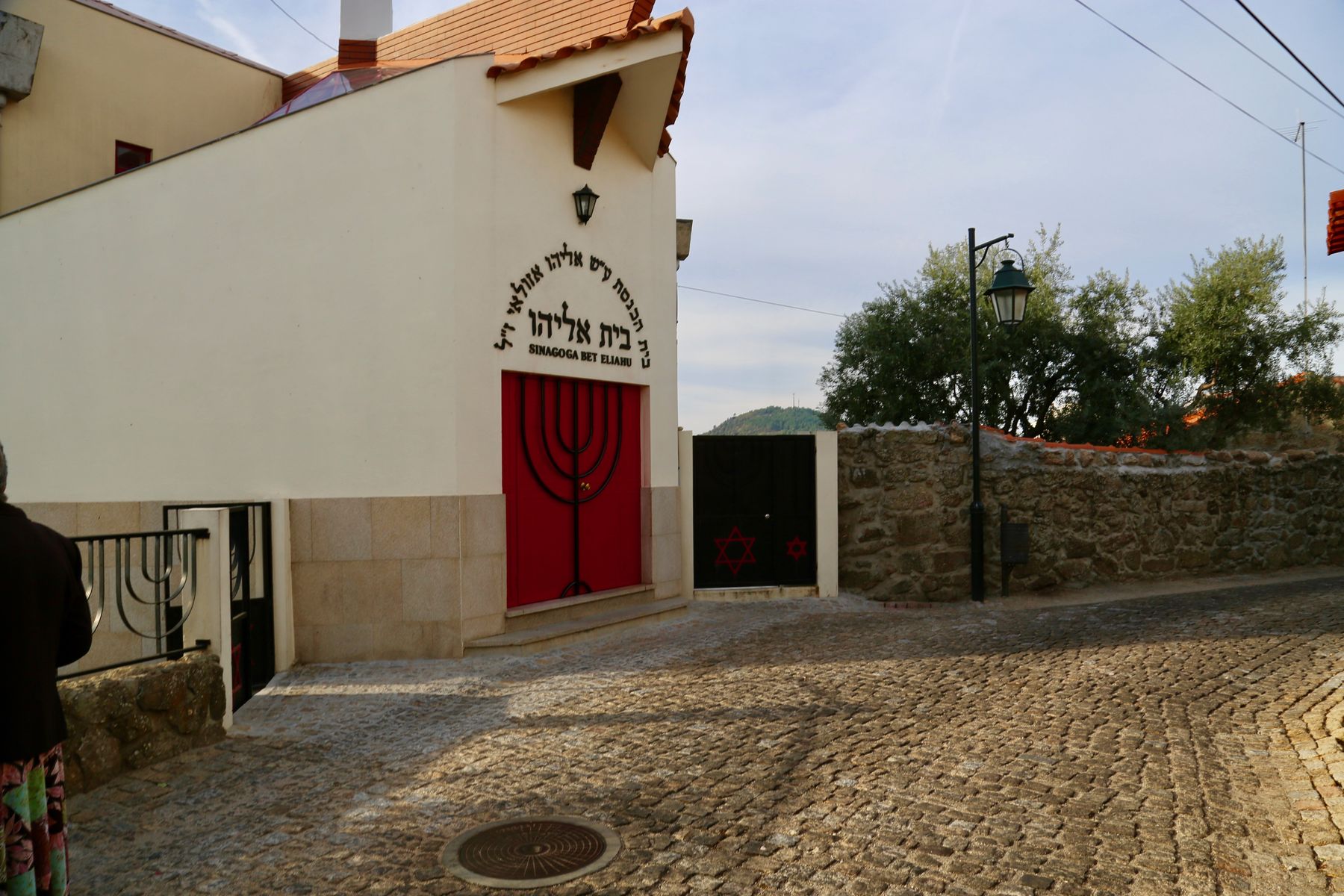
A day in Belmonte, free for rest, for the religious activities that always take place here, or simply for the quiet of the mountains that once drew thousands of Jews to settle in the region. This is among the best places in Portugal to understand a community that had to live in secret for centuries; the most active Jewish centre in the country, it still keeps the traditions that allowed the religion to be practised unseen.
Day 5Salamanca – Ávila
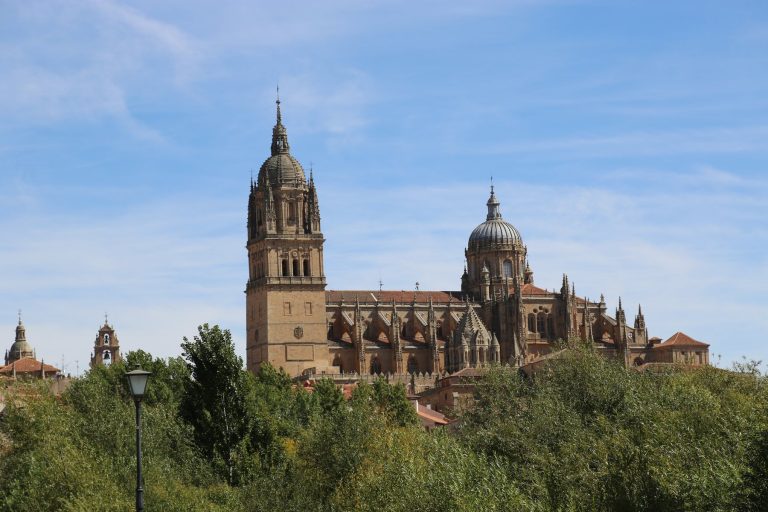
Into Spain and Salamanca, one of its most famous university cities, reached in time for lunch. The old city inside its walls, with the river running close by, will remind you of Jerusalem. Salamanca once had a sizeable Jewish population, among them scholars who used their lectures to contradict the ideas of the Spanish Inquisition. See the House of Shells and the Renaissance University, then Ávila, World Heritage, its walled city and the oldest Gothic cathedral in Spain.
Day 6Ávila – El Escorial – Madrid
From Ávila towards Madrid, by way of two of Spain’s most impressive monuments, some 45 km north of the capital. The Monastery of San Lorenzo del Escorial was built in the reign of Philip II to commemorate the victory over the French army, and is counted among the finest works of Spanish architecture. A few kilometres on lies the Valle de los Caídos, raised on Franco’s orders to honour those who died in the Spanish Civil War.
Day 7Madrid
A full day in the Spanish capital, an important business centre and the seat of the public administration, government, parliament and royal family. The Royal Palace is no longer a residence but keeps its original furniture and decoration as though the kings still lived there, while the Prado ranks among the world’s great galleries, with works by Velázquez, Goya and El Greco. Also Plaza Mayor, once a marketplace, the Puerta del Sol and the Plaza de Cibeles.
Day 8Toledo – Almagro
To Toledo, capital of La Mancha and the setting Cervantes chose for Don Quijote, once one of the most important Jewish centres. In the 14th century the city had ten Synagogues; two still stand, Santa María la Blanca and El Tránsito, which we visit, together with the Sephardic Museum housed inside El Tránsito. The afternoon takes in local churches with works by El Greco and the great Gothic cathedral, before continuing to Almagro, halfway to Granada.
Day 9Granada
South to Granada, World Heritage and one of the most spectacular cities in Spain, set below the Sierra Nevada. It was the last city taken from the Moors, in 1492, by the Catholic Kings Fernando and Isabella, who in March of that year signed the expulsion order against the Jewish population. Visit the Alhambra, with its enchanting use of space, light and water, the Cathedral, the Albaicín quarter, and the San Nicolás belvedere for the view at dusk.
Day 10Córdoba – Seville
On through southern Spain to Córdoba, classified World Heritage by UNESCO. The old Jewish quarter comes first, passing the Synagogue and the surrounding Zouk, where the Moorish market stood and the atmosphere of that era still lingers. In these streets you will find the shops and occupations that were once exclusively Jewish, among them the gold and silversmiths. At the end of the day we continue to Seville, where the night is spent.
Day 11Seville
A full day in Seville, on the banks of the Guadalquivir, whose large Jewish population disappeared after the tragic events of 1391. Begin at the Torre del Oro, named for the golden colour of its stone, then the Alcázar, the old palace of the Moorish governor, and the Cathedral, with the largest nave in Spain, where Columbus’s remains are supposed to rest. The afternoon is free for the Barrio de Santa Cruz, where the Jewish population lived, or for tapas.
Day 12Seville – Algarve
The twelfth day returns to Portugal, heading for the Algarve, the country’s most famous resort region. These closing days give you the chance to enjoy its beautiful beaches and to relax before the return to Lisbon, with the night spent at Moncarapacho.
Day 13Algarve – Vicentina Coast – Lisbon
Time to return to Lisbon. If you would rather have longer in the capital for shopping or sightseeing, we leave the Algarve in the morning. Otherwise the coast comes first: the Cape of Saint Vincent, the south-westernmost point of Europe, where the cliffs give one of the finest sea views in Portugal, and nearby Sagres, site of Prince Henry the Navigator’s great nautical school, where Jewish cartographers, geographers and mathematicians worked alongside the Portuguese explorers. Then north by the Vicentina Coast.
Day 14Lisbon – Departure
Check-out from the hotel and a transfer to the airport, which is included. End of tour.
What’s included
- Transfer to the airport on the final day