The route
Lisbon · Óbidos · Nazaré · Alcobaça · Batalha · Fátima · Coimbra · Porto · Ponte de Lima · Viana do Castelo · Vila Nova de Cerveira · Valença · Braga · Guimarães · Amarante · Vila Real · Peso da Régua · Marialva · Guarda · Castelo de Vide · Marvão · Estremoz · Évora · Monsaraz · Reguengos de Monsaraz · Algarve · Lagos · Aljezur · Odeceixe · Zambujeira do Mar · Setúbal · Palmela · Azeitão · Sesimbra · Cabo Espichel · Lisbon
Day by day
Day 1Óbidos – Nazaré – Alcobaça – Batalha – Fátima – Coimbra
Leave Lisbon on the A8 for Óbidos, a medieval town still inside its walls, its whitewashed houses bright with flowerbeds. Nazaré follows, a genuine fishermen’s town where the climb to Sítio opens a fine view of the coast. Then Alcobaça’s 12th century abbey, Batalha’s late Gothic monastery and the sanctuary at Fátima, before the A1 north to Coimbra and its old University.
Day 2Coimbra – Porto
After a morning in Coimbra, take the motorway north to Porto, a little over 100 km. Portugal’s second city stands on the north bank of the Douro, conservative and impressive. Wander the restored riverside quarter of Ribeira, a World Heritage site, then the centre for the Stock Exchange Palace, St Francis Church and the Clérigos bell tower. Cross to Vila Nova de Gaia for the Port wine cellars and a tasting.
Day 3Ponte de Lima – Viana do Castelo – Vila Nova de Cerveira
Head north with a stop in the scenic town of Ponte de Lima, whose centre still shows traces of a wealthy past. Viana do Castelo, capital of the Minho, offers a singular gastronomy, the local Vinho Verde and the Santa Luzia belvedere above the Atlantic. Continue along the coast to Vila Nova de Cerveira, with its medieval castle and well preserved 17th and 18th century mansions.
Day 4Valença – Braga – Guimarães
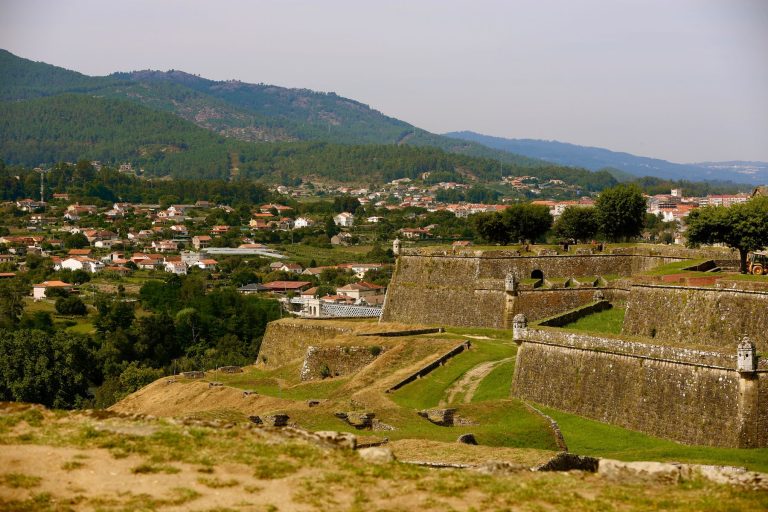
Begin at the old fortress of Valença, a lively place for lace, embroidery and linen, looking out over the river to the Spanish border. Braga holds one of the oldest cathedrals in the Iberian Peninsula, its adjoining rooms serving as a museum. In Guimarães, see the Palace of the Dukes of Bragança and the castle beside it, birthplace of the nation, then the square of Oliveira.
Day 5Amarante
A break day on the tour. Settle into your hotel in Amarante and enjoy its elegant, comfortable surroundings. Even so, few resist crossing the Tâmega to the 16th century monastery of S. Gonçalo, trying the local cooking and strolling the small historical centre. Guests on Level B stay instead at Pousada do Marão, 20 km away, set high in the mountains above the Tâmega valley.
Day 6Vila Real – Peso da Régua – Marialva
Vila Real, set high in Trás-os-Montes and inhabited since pre-historic times, is home to the 18th century baroque Mateus Palace. At Peso da Régua the terraced slopes of the Douro valley reveal the vineyards behind Port wine, and there is a cellar and farm to visit. End at Marialva, an almost abandoned medieval village with castle keep, pillory, old town hall and prison.
Day 7Guarda – Castelo de Vide – Marvão
Guarda is the highest city in the country, on the slope of the Estrela mountain range and known for its natural surroundings and ancient history. Castelo de Vide, itself a national monument, rewards the walk up to the castle wall with a view over the old Jewish quarter. Nearby Marvão sits on high defensive rocks, long a tactical refuge; the outlook from the fortress is superb.
Day 8Estremoz – Évora – Monsaraz – Reguengos de Monsaraz
Estremoz is ringed by marble quarries and known for its small clay figurines; climb to the old castle for the view across the Alentejo plains. Évora, a World Heritage city within its walls, offers the cathedral, Saint Francis church, the old University and the Roman temple of Diana, and is a fine place for lunch. Then hilltop Monsaraz, and Reguengos, in its vineyards, for the night.
Day 9Herdade do Esporão – Alentejo – Algarve
Spend the morning at the famous Herdade do Esporão. The visit explains every detail of how the wine is made and may well end with a tasting. Afterwards cross the deep Alentejo, where warm, serene fields of cereals are broken only now and then by an old holm oak, passing Portel, Beja and Ourique before joining the A2 motorway south to the Algarve.
Day 10Algarve
A free day to discover the Algarve at your own pace. Take your pick of the region’s many beaches, or spend the time in the picturesque seaside towns, where the Mediterranean culture and cooking leave a lasting impression. If you enjoy animation and a lively evening, Vilamoura and its regular shows are worth a look.
Day 11Lagos – Aljezur – Odeceixe – Zambujeira do Mar – Setúbal
Walk the historical centre of Lagos, the bay from which Portuguese explorers sailed under Henry the Navigator. The 17th century Forte do Pau da Bandeira is now an art centre, the Governors Castle another draw, and boat trips explore the coast. Aljezur has a Moorish castle, while Odeceixe and Zambujeira do Mar belong to the protected, uncrowded Costa Vicentina, all fresh fish and long sunsets. Then on to Setúbal.
Day 12Palmela – Azeitão – Sesimbra – Cabo Espichel – Lisbon
From Setúbal, climb to Palmela’s 12th century castle for a view over almost the whole peninsula and both the Tejo and the Sado. Azeitão is known for its wines and its Tortas; call at the José Maria da Fonseca cellars for a Moscatel tasting. Lunch on fresh fish and seafood at Sesimbra, take in Cabo Espichel, then return to Lisbon by the A2 and the bridge.
What’s included
- 12 nights accommodation in the selected hotels (Level A or Level B)
- 12 full breakfasts
- 12 days car hire (air-conditioned vehicle) with CDW and TP insurance and unlimited kilometres
Not included
- Circulation Fee (price on application), payable directly at the rent-a-car desk
Good to know
- The tour is offered with two levels of accommodation throughout, Level A and Level B
- The hire car category is arranged according to the size of the party: a Group C vehicle for two or three passengers, a Group F vehicle for four or five, and a Group K vehicle for six